

Are you struggling to maintain your productivity throughout the day? Do you feel drained and exhausted, despite getting enough rest? The key to overcoming these challenges lies in creating a personalized daily energy management plan.
A well-structured plan helps individuals prioritize tasks, manage their time effectively, and maintain their physical and mental well-being. By understanding the importance of energy usage optimization, readers can begin to develop their own daily blueprint for success.
Key Takeaways
- Understand the importance of a daily energy management plan
- Learn how to prioritize tasks based on energy levels
- Discover techniques for optimizing energy usage
- Develop a personalized daily blueprint for success
- Improve overall physical and mental well-being
Understanding Your Personal Energy Patterns
To manage your energy effectively, it’s crucial to first comprehend your natural energy fluctuations. Understanding your personal energy patterns can help you schedule tasks more efficiently, leading to increased productivity and reduced energy waste.
Identifying Your Natural Energy Peaks and Valleys
Everyone experiences fluctuations in energy levels throughout the day. Identifying your natural energy peaks and valleys is essential for planning your day. For instance, if you’re a morning person, you might find that your energy peaks during the early hours, making it an ideal time for focused work.
A simple way to start is by keeping a daily energy journal. Record your energy levels at different times of the day for a week or two. This will help you identify patterns and understand when you’re most energetic and when you tend to feel drained.
The Science Behind Daily Energy Fluctuations
Daily energy fluctuations are closely linked to our circadian rhythms. Our bodies have an internal clock that regulates various physiological processes, including energy levels. Understanding this natural rhythm can help you work with your body rather than against it.
“The way to get started is to quit talking and begin doing.” – Walt Disney
Research has shown that the human body typically experiences a natural dip in energy levels in the early afternoon. Recognizing this can help you plan your day more effectively, perhaps by taking a short break or engaging in a less demanding task during this time.
How to Track Your Energy Levels Effectively
Tracking your energy levels can be done using various methods. One effective way is to use a mobile app designed for tracking energy and productivity. Alternatively, you can maintain a simple spreadsheet or use a paper-based journal.
| Time of Day | Energy Level (1-5) | Activity |
|---|---|---|
| 8:00 AM | 4 | Breakfast |
| 12:00 PM | 3 | Lunch |
| 4:00 PM | 2 | Meeting |
By tracking your energy levels and understanding your natural patterns, you can make informed decisions about your daily routine, leading to improved energy efficiency and productivity.
Morning Energy Optimization Strategies
Boosting your morning energy can significantly enhance your productivity and set you up for success throughout the day. By implementing a few strategic changes to your morning routine, you can optimize your energy levels and improve your overall well-being.
Step 1: Design Your Power-Up Wake Routine
Your wake-up routine sets the tone for the day. Consider incorporating energizing activities such as stretching, meditation, or a short workout to get your blood flowing. As Tony Robbins says, “The way you start your day is the way you’re going to live your day.”
“The way you start your day is the way you’re going to live your day.”
Exposure to natural light is also crucial; it helps regulate your circadian rhythms, making it easier to wake up. Try to open your curtains or take a short walk outside in the morning.
Step 2: Choose Energy-Boosting Breakfast Foods
Breakfast is a critical meal for replenishing your energy stores after an overnight fast. Opt for nutrient-dense foods like whole grains, fruits, and lean proteins. Foods high in fiber and protein can help sustain your energy levels throughout the morning. Avoid sugary cereals and foods high in processed ingredients, as they can lead to an energy crash later.
Some examples of energy-boosting breakfast foods include oatmeal with nuts and fruits, Greek yogurt with berries, and scrambled eggs with whole-grain toast.
Step 3: Set Clear Daily Intentions and Priorities
Setting clear intentions and priorities helps you stay focused and directed. Take a few minutes each morning to review your schedule and identify your top tasks for the day. Use a planner or a digital tool to organize your tasks and break them down into manageable chunks. This practice not only boosts your energy by providing a clear direction but also enhances your productivity.
By following these three steps, you can create a morning routine that optimizes your energy levels and sets you up for a successful day. Remember, the key is to be consistent and make adjustments as needed to find what works best for you.
Maximizing Your Peak Performance Hours
Your daily energy patterns hold the key to unlocking your most productive work sessions. Understanding and leveraging these patterns is crucial for achieving peak performance.
Scheduling High-Impact Tasks During Energy Peaks
To maximize your productivity, it’s essential to schedule your most challenging tasks during your energy peaks. This strategic alignment ensures that you’re tackling critical work when you’re most capable.
Steps to Schedule High-Impact Tasks:
- Identify your energy peaks through tracking or self-observation.
- List your high-impact tasks that require maximum energy and focus.
- Schedule these tasks during your identified energy peaks.
Eliminating Energy-Draining Distractions
Distractions can significantly drain your energy and decrease productivity. Minimizing these distractions is vital for maintaining focus during your peak hours.
Strategies to Eliminate Distractions:
- Create a conducive work environment by reducing noise and clutter.
- Use tools or apps that block social media and other distracting websites.
- Communicate your work hours to colleagues, family, and friends to minimize interruptions.
Applying Time-Blocking for Focused Work Sessions
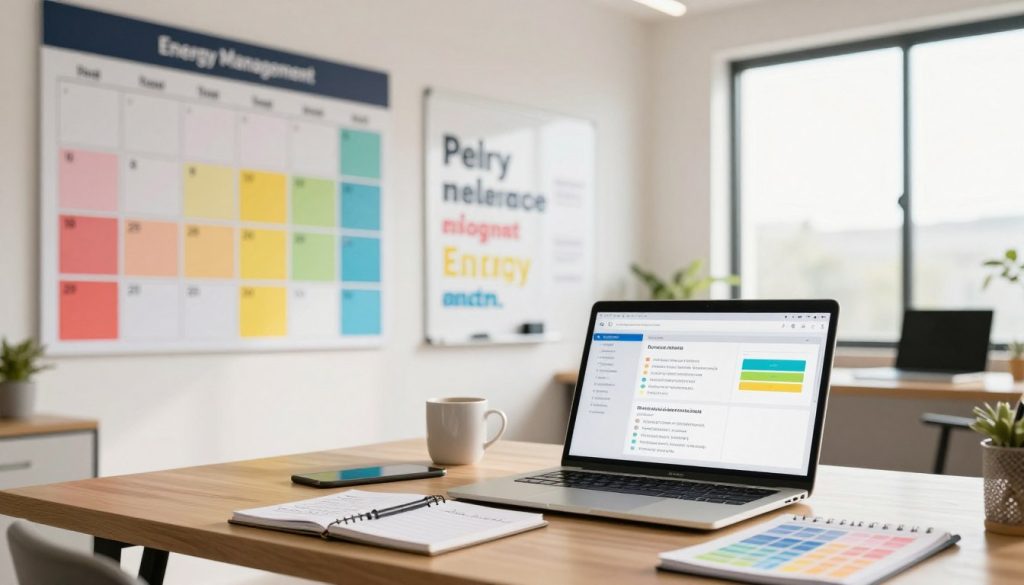
Time-blocking is a powerful technique for maximizing productivity. By dedicating specific time slots to tasks, you can work more efficiently and effectively.
| Time Block | Task | Energy Level Required |
|---|---|---|
| 8:00-9:00 AM | High-impact task | High |
| 9:00-10:00 AM | Medium-impact task | Medium |
| 10:00-11:00 AM | Low-impact task | Low |
By implementing these strategies, you can significantly enhance your productivity during peak performance hours, leading to a more effective energy management daily blueprint.
Managing Afternoon Energy Dips Effectively
As the day wears on, many of us experience a natural dip in energy levels, but there are effective strategies to manage this slump. Afternoon energy dips can significantly impact productivity and overall well-being. By implementing the right techniques, you can maintain your energy levels and stay focused throughout the day.
To combat afternoon fatigue, it’s essential to adopt a multi-faceted approach that includes strategic break-taking, physical movement, hydration, and smart snacking.
Step 7: Implement Strategic Break-Taking Techniques
Taking regular breaks can help you recharge and maintain productivity. Strategic break-taking involves more than just stepping away from your desk; it’s about using your time effectively to refresh your mind and body.
- Take a short walk outside to get some fresh air and sunlight.
- Practice deep breathing exercises or meditation to calm your mind.
- Engage in a hobby or activity that you enjoy and that relaxes you.
By incorporating these activities into your breaks, you can return to your tasks with renewed energy and focus, applying effective energy efficiency tips to your daily routine.
Step 8: Use Movement and Hydration to Recharge
Physical movement and hydration are crucial for maintaining energy levels. Even a short burst of activity can significantly boost your energy.
Try incorporating some form of movement into your afternoon routine, such as:
- Stretching exercises at your desk.
- A quick workout or yoga session.
- A short dance break to your favorite music.
Additionally, staying hydrated is vital for maintaining energy levels. Drink water regularly throughout the day to prevent dehydration, which can lead to feelings of fatigue. Implementing these practices is part of adopting sustainable energy solutions for your daily life.
Step 9: Choose Smart Snacks for Sustained Energy
The snacks you choose can have a significant impact on your energy levels. Opt for snacks that are rich in nutrients and fiber, as these provide sustained energy rather than a quick spike followed by a crash.
Some examples of smart snacks include:
- Nuts and seeds.
- Fresh fruit.
- Vegetables with hummus.
- Whole grain crackers with avocado or peanut butter.
By choosing the right snacks, you can maintain your energy levels and support your overall health, applying energy consumption reduction strategies by avoiding energy-draining foods.
In conclusion, managing afternoon energy dips effectively requires a combination of strategic break-taking, physical movement, hydration, and smart snacking. By implementing these strategies, you can maintain your productivity and energy levels throughout the day.
Evening Energy Wind-Down Protocol
As the day comes to a close, it’s essential to implement an effective evening energy wind-down protocol. This involves a series of steps designed to help your body and mind transition into a state of relaxation, preparing you for restorative sleep.

Step 10: Create Effective Transition Rituals
Creating effective transition rituals is crucial for signaling to your body that it’s time to wind down. This can include activities like meditation, reading, or taking a warm bath. The key is to find activities that help you relax and signal the end of the day’s activities.
Step 11: Practice Digital Detox Before Bedtime
Practicing digital detox before bedtime is vital for improving sleep quality. The blue light emitted by smartphones, tablets, and computers can suppress the production of melatonin, the hormone that regulates sleep. By avoiding screens for at least an hour before bedtime, you can help your body produce melatonin naturally, leading to better sleep.
Step 12: Prepare Your Environment for Restorative Sleep
Preparing your environment for restorative sleep involves making your bedroom a sleep sanctuary. This includes ensuring the room is cool, dark, and quiet, and investing in a comfortable mattress and pillows. By creating a sleep-conducive environment, you can significantly improve the quality of your sleep.
By incorporating these steps into your evening routine, you can develop energy saving techniques that not only improve your sleep but also contribute to an overall eco-friendly energy management plan. Adopting green energy habits in your daily routine, including the evening, can have a positive impact on both your personal energy levels and the environment.
Building Your Complete Energy Management Daily Blueprint
To achieve optimal energy levels throughout the day, it’s essential to develop a personalized daily blueprint. This involves understanding your energy patterns, scheduling tasks accordingly, and making adjustments as needed.
Creating Your Personalized Daily Energy Schedule
Start by mapping out your daily routine, including work hours, commute time, and personal activities. Use this information to create a schedule that aligns with your energy peaks and valleys.
- Identify your most energetic times of the day
- Schedule high-priority tasks during these periods
- Break larger tasks into smaller, manageable chunks
By doing so, you’ll be able to maximize your productivity and reduce fatigue. For instance, if you’re most energetic in the morning, tackle complex tasks then, and save less demanding tasks for when your energy dips.
Adapting the Blueprint to Your Unique Lifestyle
Everyone’s lifestyle is different, and your energy management plan should reflect this. Consider your work commitments, family responsibilities, and personal preferences when crafting your daily schedule.
For example, if you’re a parent, you might need to adjust your schedule to accommodate your children’s needs. Similarly, if you have a non-traditional work schedule, you’ll need to adapt your energy management plan accordingly.
| Lifestyle Factor | Energy Management Strategy |
|---|---|
| Family Commitments | Schedule energy-intensive tasks around family responsibilities |
| Non-Traditional Work Schedule | Adjust your sleep schedule and daily routine to align with work hours |
| Personal Preferences | Incorporate activities that boost your energy, such as exercise or meditation |
Weekly Review and Adjustment Strategies
Regular review and adjustment of your energy management plan are crucial for its success. Set aside time each week to assess your progress and make necessary changes.
Measuring Your Progress
Track your energy levels and productivity throughout the week. Use a journal or an app to monitor how well your daily schedule is working for you.
- Note days when you felt particularly energetic or fatigued
- Identify patterns or triggers that affect your energy
- Adjust your schedule as needed to optimize your energy
Fine-Tuning Your Daily Practices
Based on your progress, make adjustments to your daily routine. This might involve rescheduling tasks, incorporating new energy-boosting activities, or changing your sleep habits.
Remember, the key to effective energy management is flexibility and a willingness to adapt. By regularly reviewing and adjusting your daily blueprint, you can ensure it continues to support your needs and goals.

Conclusion
By now, you have a comprehensive understanding of how to manage your daily energy effectively. Implementing the strategies outlined in this article will help you achieve sustained high performance and improved well-being. By incorporating energy efficiency tips into your daily routine, you can optimize your energy levels and maintain productivity throughout the day.
A well-crafted daily energy management blueprint is a key component of sustainable energy solutions for your personal and professional life. By prioritizing your energy and focusing on high-impact tasks during your peak hours, you can make significant progress towards your goals. Remember to review and adjust your blueprint regularly to ensure it continues to align with your unique lifestyle and needs.
As you put your daily energy management blueprint into action, you will experience the benefits of improved energy efficiency and a more balanced approach to your work and personal life. Start your journey towards sustained high performance and well-being today by implementing these practical strategies.